
Best Time to Fish in Curacao: Fishing Seasons Explained
Updated: Oct 3
If you're planning a fishing charter in Curaçao, one of the first questions you may have is: when is the best time to fish in Curacao?
The simple answer is: there is no single best month.
Yellowfin tuna, wahoo, mahi-mahi, sailfish and marlin can all be found in Curaçao's waters throughout the year. What changes is how many of a particular species we see, where we find them and how hard we have to work to locate them.
Some periods traditionally produce more of one species than another. But offshore fishing isn't controlled by a calendar.
Currents change. Water temperatures move. Bait moves. FADs come and go. Climate patterns change from year to year.
That's why aboard Speedy, we don't simply look at the month and head to the same fishing spot every morning.
We look at what the ocean is doing that day.
Best Time to Fish in Curacao: Fishing Season Calendar
We've put together the calendar below as a general guide based on published Curaçao fishing calendars combined with our own experience fishing these waters.
Published local calendars also show considerable year-round availability. For example, Fish Curaçao rates yellowfin at least Good throughout the year, while mahi-mahi, wahoo and the major billfish species likewise remain possible across all 12 months.
SPEEDY FISHING CALENDAR
Species | Jan | Feb | Mar | Apr | May | Jun | Jul | Aug | Sep | Oct | Nov | Dec |
|---|---|---|---|---|---|---|---|---|---|---|---|---|
Yellowfin Tuna | Good | Good | Excellent | Excellent | Excellent | Excellent | Excellent | Good | Good | Good | Good | Good |
Wahoo | Excellent | Excellent | Excellent | Excellent | Good | Good | Fair | Fair | Good | Excellent | Excellent | Excellent |
Mahi-Mahi | Good | Good | Good | Excellent | Excellent | Excellent | Excellent | Excellent | Good | Good | Good | Good |
Sailfish | Good | Good | Fair | Fair | Fair | Fair | Good | Good | Good | Excellent | Excellent | Excellent |
Blue Marlin | Good | Good | Good | Fair | Fair | Fair | Good | Good | Excellent | Excellent | Excellent | Good |
White Marlin | Good | Good | Good | Fair | Fair | Fair | Good | Good | Excellent | Excellent | Excellent | Excellent |
Barracuda | Excellent | Excellent | Excellent | Good | Fair | Fair | Fair | Fair | Good | Excellent | Excellent | Excellent |
Rainbow Runner | Good | Fair | Fair | Fair | Fair | Good | Good | Excellent | Excellent | Excellent | Excellent | Good |
Fair — The species is still present and can absolutely be caught, but we generally see fewer of them or have to work harder to find them.
Good — Historically a productive period with regular opportunities.
Excellent — Generally one of the stronger periods when we tend to see more of that particular species.
Important: This is a seasonal guide, not a guarantee. A month marked Fair doesn't mean you can't catch a trophy fish. Likewise, an Excellent month doesn't guarantee a bite.
That distinction matters in Curaçao.
Yellowfin Tuna Fishing in Curaçao
Yellowfin tuna are a perfect example of why we don't rely completely on fishing calendars.
We catch yellowfin throughout the year.
Our own catches include sizeable yellowfin on dates as spread out as February 27, May 21, July 7, July 24, July 27, September 27 and December 22.
In July 2026 alone, two charters just three days apart produced yellowfin estimated at approximately 33 kg (73 lb) and 50 kg (110 lb).

So even when a seasonal table suggests one period should be better than another, a big yellowfin can turn up at almost any time.
Finding them is the important part.
We regularly find tuna around Curaçao's offshore FADs, particularly the FADs farther offshore, but they don't have to be sitting around a buoy.
When fishing open water, we're looking for signs of life.
Birds working the surface, flying fish and smaller tuna such as skipjack can all indicate that we're in productive water. We also use smaller tuna and other live baits when targeting bigger yellowfin.
Sometimes the best fishing isn't at a FAD at all. It's along a current edge miles away from it.
→ Read our Complete Guide to FAD Fishing in Curaçao
Wahoo Fishing in Curaçao
If wahoo is the fish you're specifically coming to Curaçao for, we'd generally lean towards the cooler winter period, with December being a particularly interesting time.
Unlike much of our tuna fishing, we don't necessarily need to run far offshore to find them.
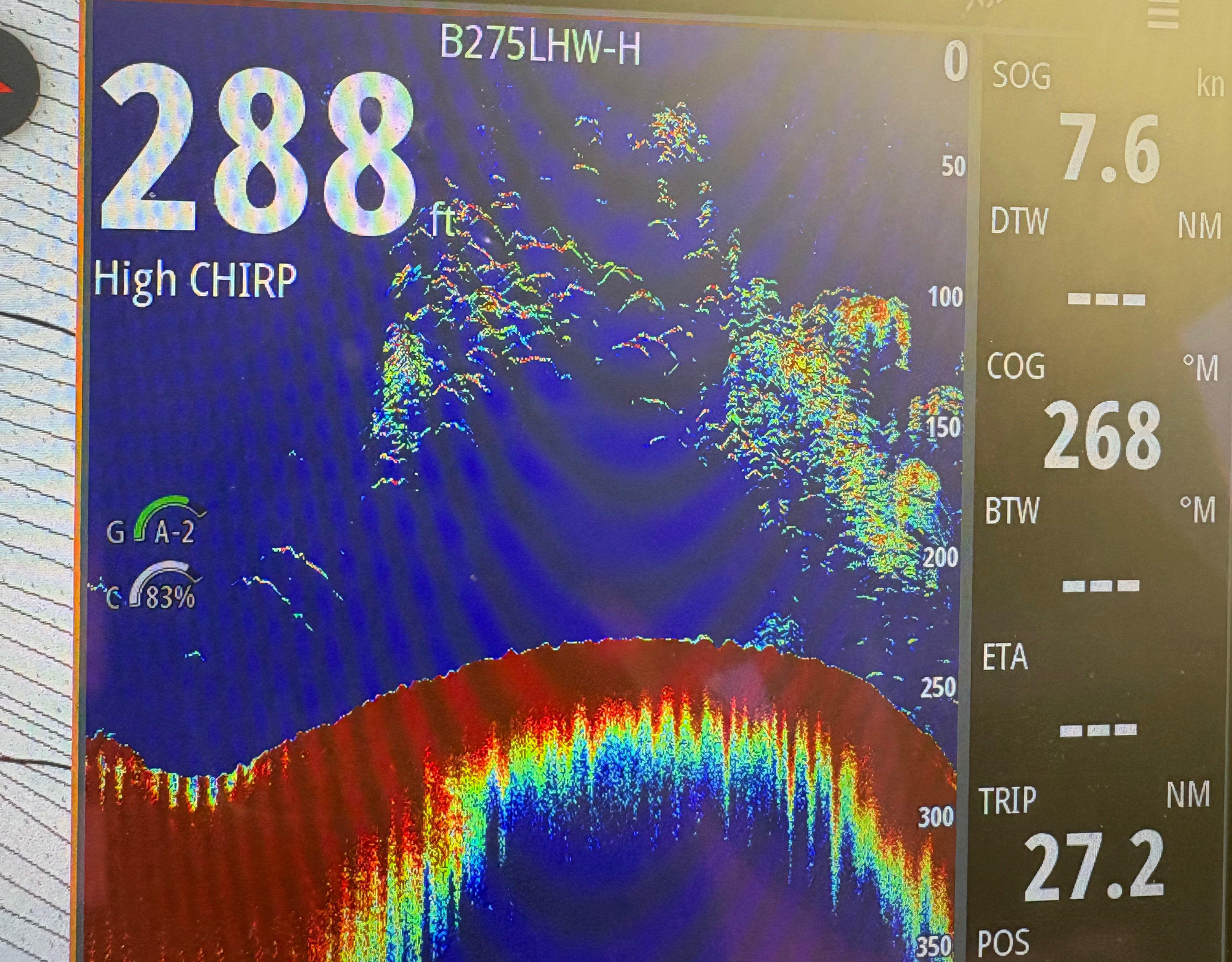
During a good wahoo period, we can find fish relatively close to Curaçao's coastline in approximately 250–300 feet of water, from around Caracasbaai towards East Point and around Klein Curaçao.
We can also encounter them around FADs closer to shore.
And when the wahoo are properly here, the difference can be significant.
During slower periods, we may encounter only one or two over several trips. When they're active, it's possible to encounter several during a single charter.
Wahoo often aren't alone either. Finding the first fish is a good reason to keep working that area.
Mahi-Mahi Fishing in Curaçao
Mahi-mahi are another year-round species, but summer can be particularly interesting.
During this period, floating debris and sargassum can create exactly the type of structure mahi like to hold around.
Sometimes we'll arrive at a FAD and find a complete school underneath it — 10, 15 or even 20 mahi of different sizes.
Other times, we find them well away from the FADs.
Sargassum lines and floating debris can hold mahi offshore, so we're constantly watching the water while trolling.
And mahi fishing can change very quickly.
One fish showing itself can reveal an entire school. What begins with one hookup can turn into several fish around the boat.
We've even used smaller mahi as live bait when targeting marlin.
Sailfish and Marlin Fishing in Curaçao
Blue marlin, white marlin and sailfish can all appear throughout the year.
September and the later part of the year can be particularly interesting for billfish, but we've encountered them at many different times and in very different places.
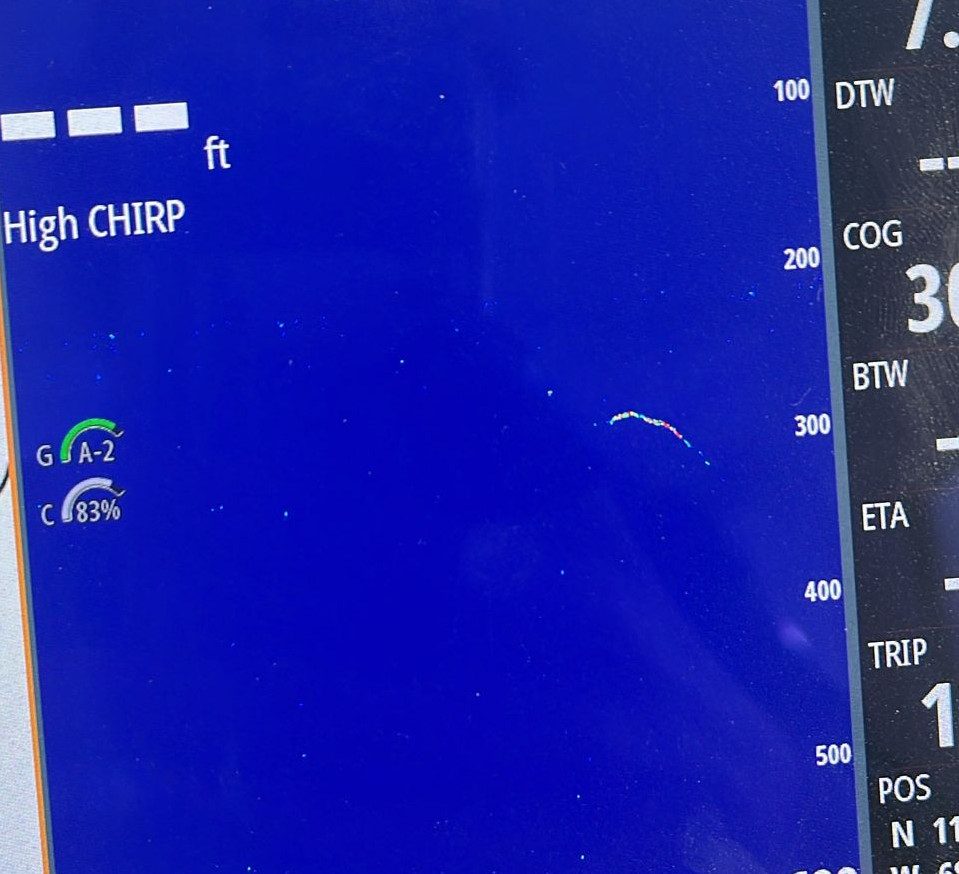
Sometimes that means trolling between offshore FADs.
Sometimes we find them right on a FAD while we're live-baiting for tuna.
Sometimes a billfish suddenly appears while mahi are feeding around the boat.
And sometimes they're surprisingly close to Curaçao.
In September 2026, for example, we went three for three on sailfish across two trips, including a fish approximately two miles offshore from the entrance at Caracasbaai.
Blue marlin are generally solitary fish, although double hookups can happen. Sailfish can also appear in small groups, creating the possibility of multiple fish around the spread.
When we spot or mark a billfish during a trip, we'll often work that area again to see if we can get the fish to come up and eat.
All sailfish, blue marlin and white marlin caught aboard Speedy are strictly catch-and-release.
Why the Current Can Matter More Than the Calendar

This is where fishing Curaçao becomes much more interesting than simply saying, “It's December, so let's fish for wahoo.”
Current is one of the biggest factors in deciding where we fish.
Curaçao has several offshore FADs, and their productivity can change depending on the direction and position of the current.
If productive water and current are pushing from the north, for example, the northern FADs may be the better choice that day. That doesn't mean there's nothing at the southern FADs — it simply helps us decide where we believe our best opportunity will be.
The current also influences bait, fish movement and sea conditions.
So before and during a trip, we're constantly building a picture of what's happening offshore.
How We Use SST, Current Edges and Ocean Data
Modern offshore fishing gives us another tool: satellite and oceanographic data.
We use Salty Offshore to study conditions before heading out, including:
Sea Surface Temperature (SST)
SST fronts
current direction and current edges
FSLE fronts
mixed layer depth

Salty Offshore provides offshore anglers with layers including SST, surface currents and other ocean datasets that can be combined to identify changing water and edges.
But the map doesn't catch the fish for us.
It helps us decide where to start looking.
We're interested in colder water, temperature changes, current edges and areas where conditions suggest bait may concentrate.
Then we combine that information with what we're physically seeing offshore.
Birds. Flying fish. Bait. Smaller tuna. Surface activity.
When those signs begin coming together with the ocean data, we know we're looking in an area worth working.
Why FADs Are So Important for Fishing in Curaçao
FAD stands for Fish Aggregating Device.
They're extremely important to Curaçao's offshore fishery because floating structure attracts smaller marine life and baitfish, which in turn can attract larger predators.
Rainbow runners, for example, are commonly found around the FADs and form part of the food chain larger pelagic predators are hunting.
Yellowfin tuna, mahi-mahi and billfish can all be encountered around them as well.
But the number of available FADs isn't constant.
Many are publicly accessible government-placed FADs, while members of Curaçao's fishing community also deploy their own.
Rough weather, strong currents, boats and fishing gear can cause FADs to become damaged or disappear.
There might be only two or three productive FADs available at one point and considerably more during another period.
That's another reason two fishing trips during the same month can be completely different.
Does Curaçao's Weather Affect the Fishing?
Absolutely.
Curaçao is warm throughout the year, but the ocean and weather still have seasonal patterns.
According to the Meteorological Department Curaçao, average sea temperatures are around 25.9°C during February–March and rise to approximately 28.2°C around September–October. The dry season generally runs February through May, while July through September are transitional months and the rainy season runs October through January.
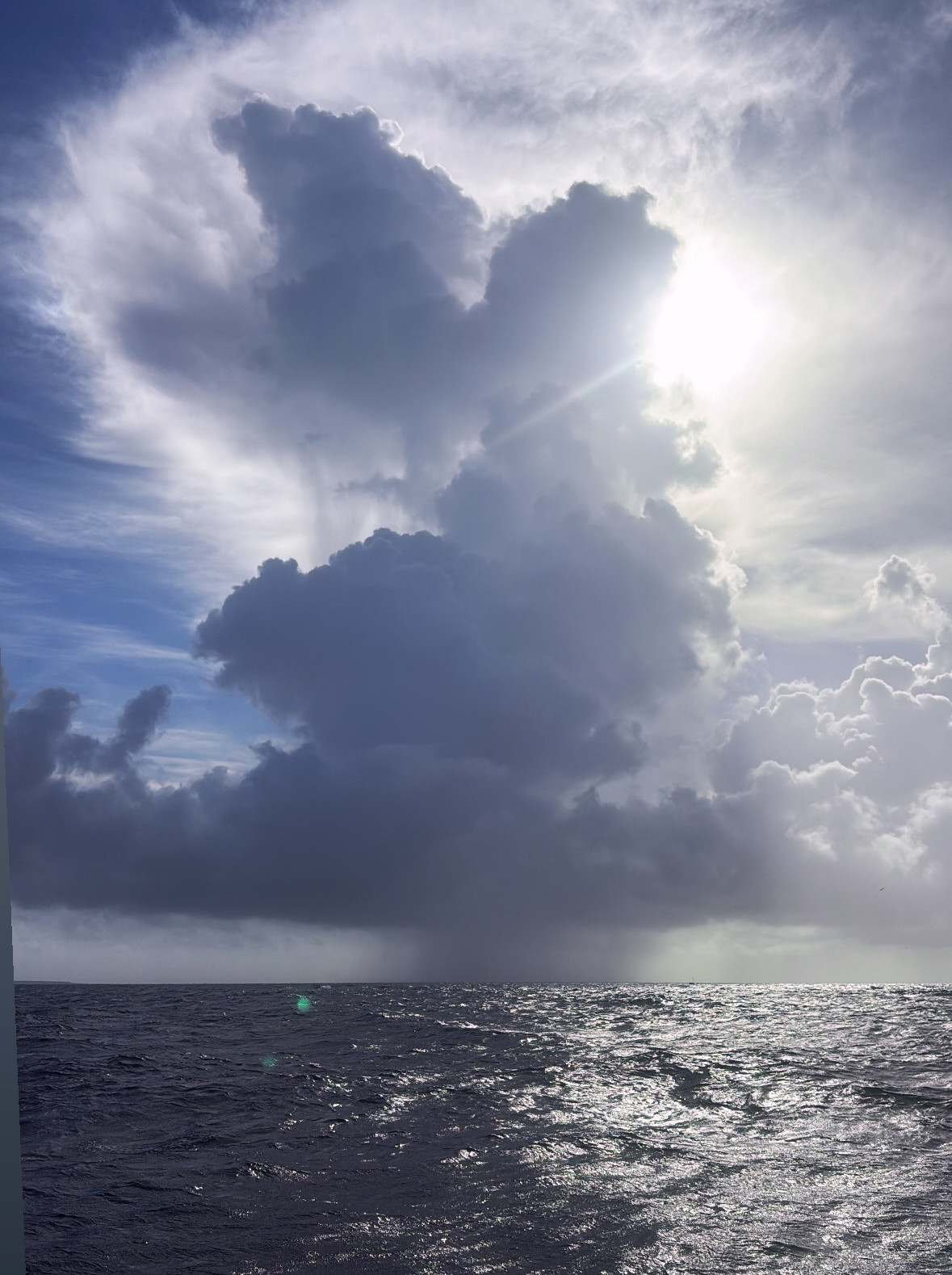
Trade winds are also a major part of Curaçao's climate.
Locally, stronger winds around Lent are sometimes referred to as Biento di Cuaresma — literally the “wind of Lent.” The term is also used on neighboring Aruba, where it is associated with the particularly windy Lent period.
For us as fishermen, more wind can mean choppier and rougher seas.
But rougher water doesn't necessarily mean worse fishing.
More water movement and stronger currents can sometimes help concentrate bait and activate the fish.
During calmer summer periods, the opposite can happen. Offshore conditions can be beautiful — flat seas, little wind and plenty of sunshine — but warmer, quieter water can sometimes make finding an active bite more difficult.
Curaçao's Atlantic hurricane season officially runs June 1 through November 30, with regional activity typically peaking August through October. Because Curaçao lies on the southern edge of the Atlantic hurricane region, direct impacts are relatively rare.
Tropical weather farther away can still influence our local wind, swell, current, cloud cover and rainfall.
Why Fishing Seasons Can Change From Year to Year
This is perhaps the most important part of any Curaçao fishing calendar:
No two years are exactly the same.
Large-scale climate patterns such as El Niño and La Niña can influence ocean and atmospheric conditions. Curaçao's meteorological service notes, for example, that El Niño tends to suppress Curaçao's main October–January rainy season, while La Niña tends to enhance it.
For fishing, we're interested in the result we actually see offshore: changes in temperature, current, bait distribution and where the fish are holding.
That's why historical fishing seasons should be treated as a starting point rather than a schedule the fish have to follow.
So, What Is the Best Month to Fish in Curaçao?
It depends on what you want to catch.
If wahoo is high on your list, we'd lean towards the cooler winter period.
If you want mahi-mahi, summer can be a very interesting time, particularly when FADs, sargassum and floating debris are holding fish.
For billfish, they're possible throughout the year, with some periods producing several weeks of noticeably increased activity.
And if you're chasing a big yellowfin tuna, our own catches demonstrate exactly why we don't want to promise one particular month. We've caught quality fish from February right through to December.
If you don't care which species you catch and simply want a good day offshore?
Come fishing.
There's something to target throughout the year.
And if one particular species is important to you, contact us before booking. We'll tell you what we've actually been seeing on the water recently.
You can also follow our fishing reports and social media, because when a particular bite switches on, we'll show you.
Ready to Go Fishing in Curaçao?
Every trip starts at Fisherman's Wharf at Caracasbaai, and our private fishing charters are available for up to six guests.
Choose between a 4-hour, 6-hour or 8-hour private fishing charter, depending on how much time you want offshore and how far we're able to search for the fish.
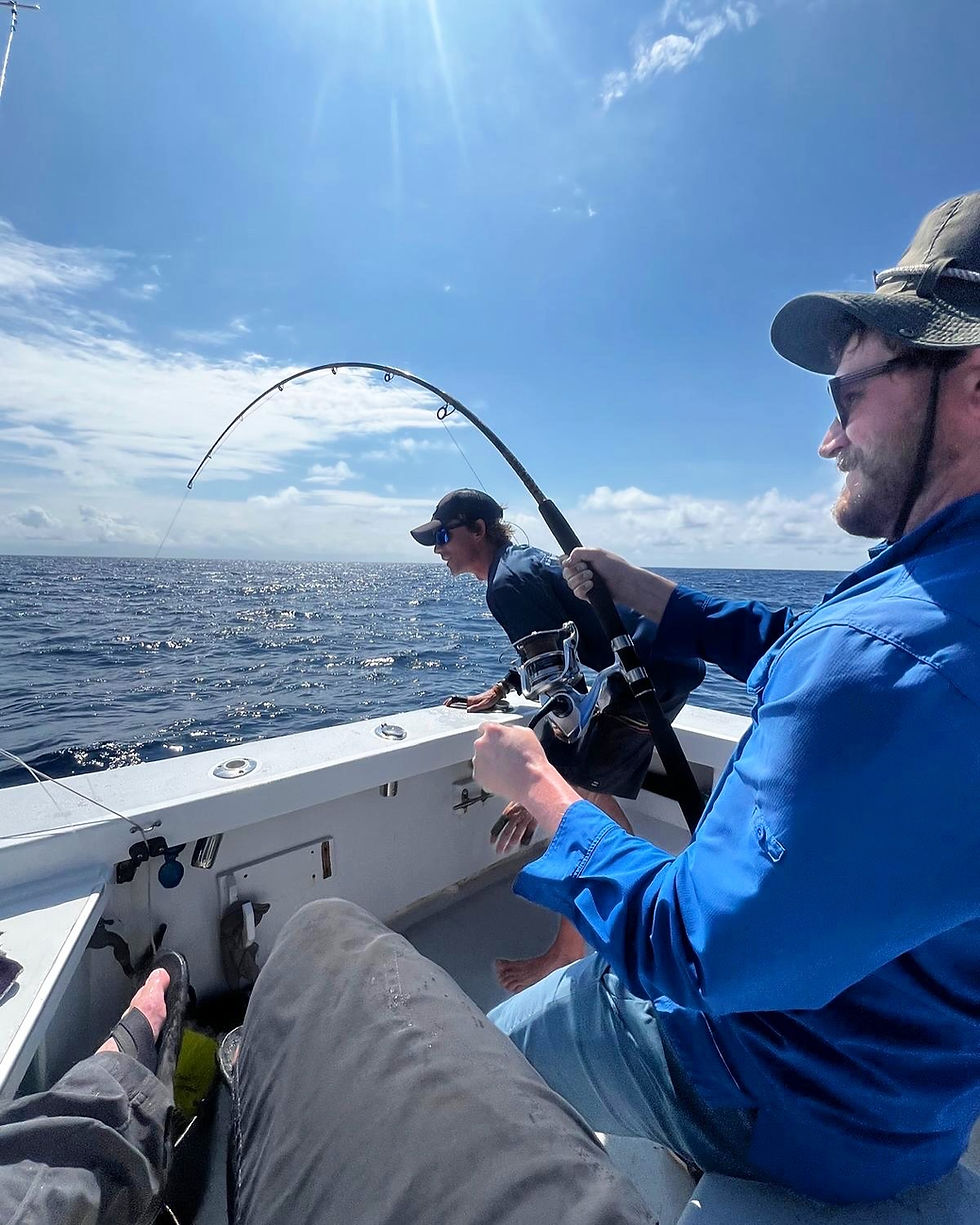
Whether it's your first time offshore or you're specifically looking for yellowfin, wahoo, mahi-mahi or billfish, we'll use the conditions on the day to decide where we believe your best opportunity is.


Comments